Where skiing learned to be elegant
The Arlberg holds a special place in Alpine history. It was here, in the early twentieth century, that Hannes Schneider shaped the technique that taught the world to ski, and St. Anton's ski school became a model copied across continents.
Today, Lech, Zürs, St. Anton, Stuben and Warth-Schröcken are linked as Ski Arlberg, the largest connected ski area in Austria. Its northern position catches heavy snowfall, and the powder here has an almost mythical reputation.
“In the Arlberg, hospitality is inherited — passed from one generation of hosts to the next.”
Lech: quiet refinement
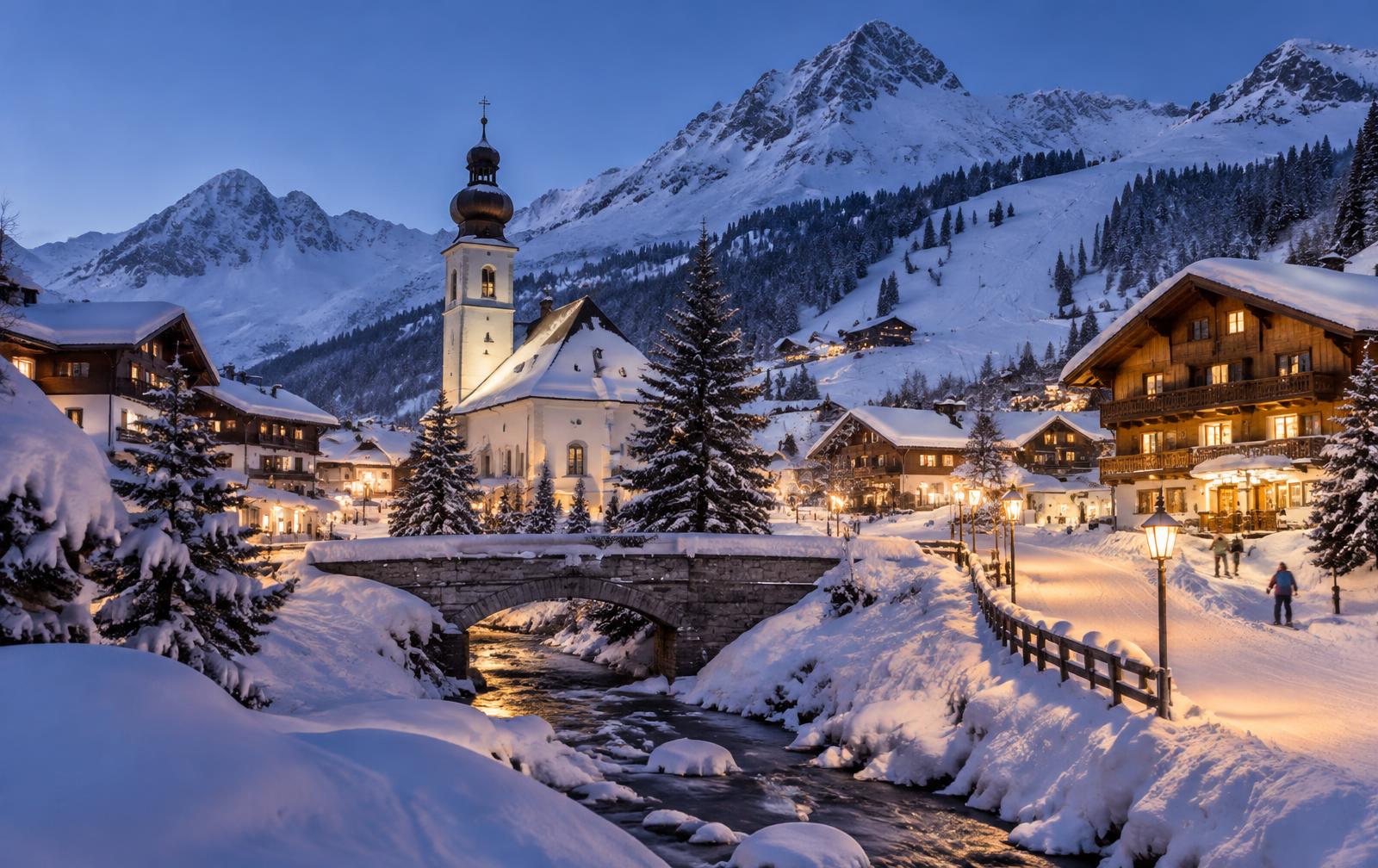
Lech is the Arlberg's most discreet village — a cluster of wooden chalets and family-owned hotels around a white church with an onion-dome tower, the river Lech running through its heart. Building rules have protected its scale, so it still feels like a village rather than a resort.
Its most celebrated circuit is Der Weiße Ring, the White Ring, a loop of around 22 kilometres linking Lech, Zürs, Zug and Oberlech. Skiing it from first lift to lunch is one of the great rituals of an Arlberg holiday.
St. Anton: energy at altitude
Where Lech whispers, St. Anton sings. The Valluga rises above the village, offering steep pistes and long off-piste descents for confident skiers, while the après-ski scene is among the most spirited in the Alps.
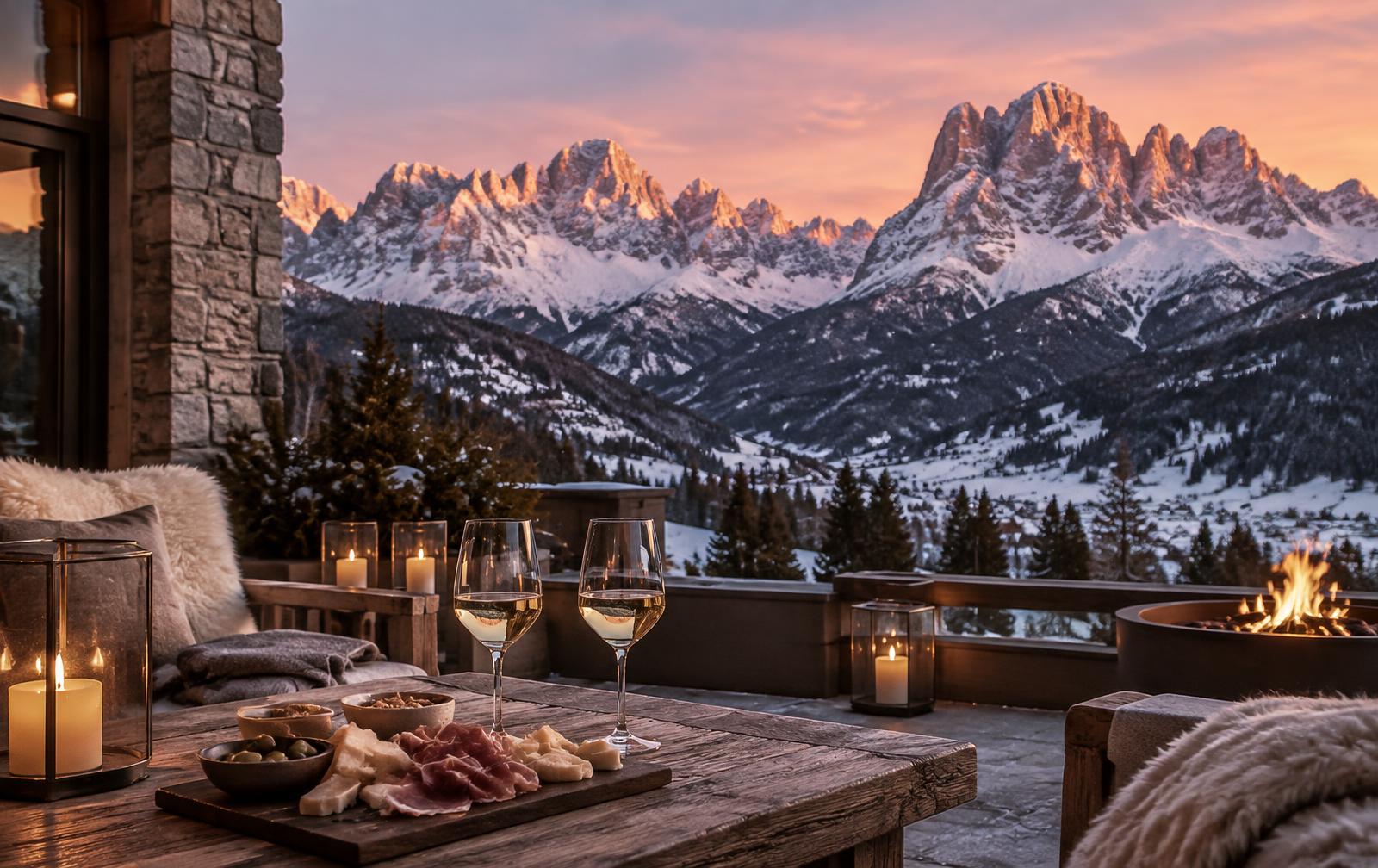
Evenings belong to Austrian cuisine at its most generous: Tafelspitz, Kaiserschmarrn, cheese from the Vorarlberg valleys, and wines from the Wachau poured beside a tiled stove.